
Beth Chatto’s garden in Essex is one of the most inspiring gardens amongst many that I have visited over the years. I was fortunate to have opportunities during 2024 to make two separate visits. If you have never been to the garden, I can highly recommend it, it’s a wonderful day out in a peaceful and stunning garden which will appeal to anyone who is passionate about plants and gardens.
Beth began the transformation from an orchard on her husband’s farm into the amazing garden seen today, in 1960. The land was not inspirational in that it had poor gravel soil and boggy hollows, but she was not deterred and designed the garden to make the best of the landscape in an ecological manner. She was way ahead of her time in that regard.
There are now a series of different gardens around the site including the world-famous Gravel Garden – which began life as the Mediterranean garden and has since evolved. There is also a Water Garden, a Reservoir Garden and the Shade and Woodland Garden. It is therefore an education for almost all gardeners who are not fortunate enough to have many different types of area to develop. It is also difficult to pick a favourite area. I have included images from both the Water Garden and the Gravel Garden so you can see how they look.
The Gravel Garden
As you enter the garden, the Gravel Garden sweeps away to your right, protected by high hedges, there is a plethora of grey leaved plants, of small shrubs and other interesting specimens around a broad winding pathway that is intended to look like a riverbed.
Beth started this garden in 1990. I remember my first ever visit where this area was the car park – goodness knows how long ago that was! The car park has morphed into a lovely area using tried and tested plants that are used to demonstrate that no irrigation is needed even in this drought ridden place in East Anglia. The area near Colchester is one of the driest climatic zones in the UK, so it was a huge gamble designed to test the plants to their very limits. However, as can be seen from the photographs, there is a wide variety of different plants and textures in pleasing arrangements.

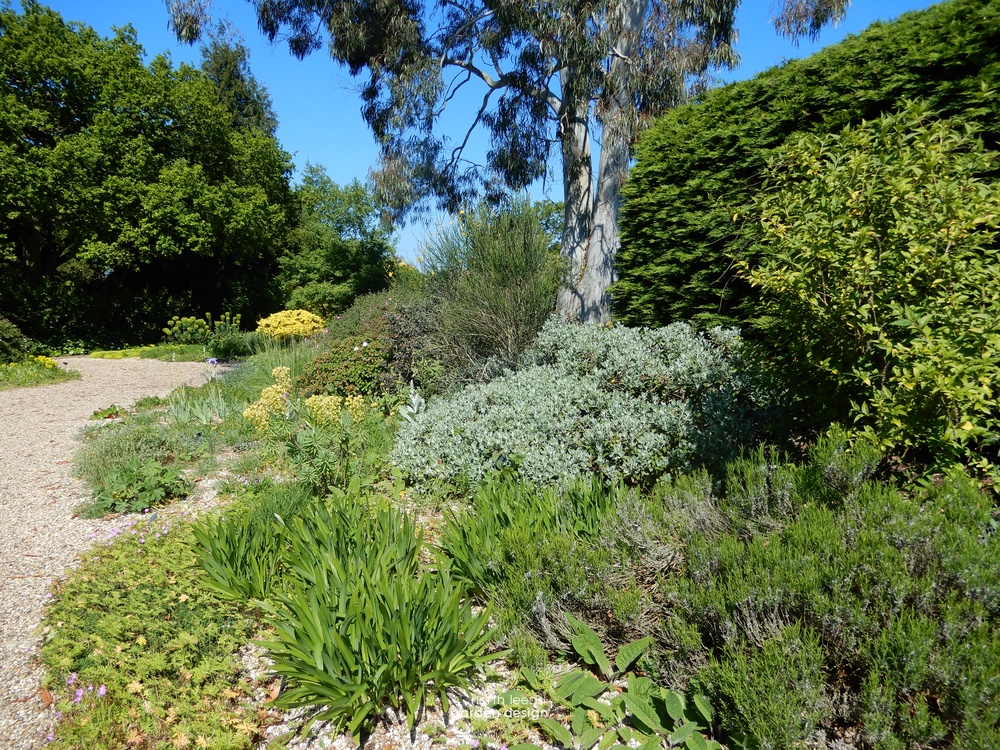
The area was naturally poor soil and gravel, so when it was originally planned, a great deal of compost was added before a gravel topping finished it off. Since that time, more gravel is added periodically, and the area is hoed to keep any weeds down. Milder winters in recent times have assisted the area to get established firmly and now is a perfect demonstration of Beth’s mantra which is ‘right plant, right place’.
Even in early winter, the Gravel Garden continues to hold great interest in heights, flowering plants and textures.
The Water Garden
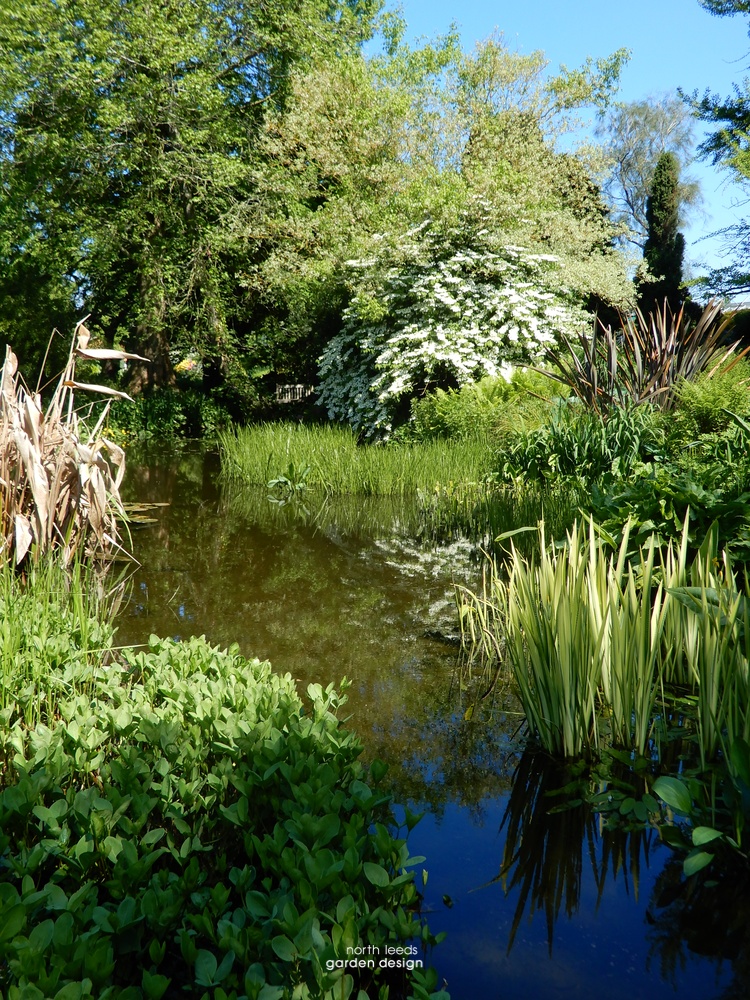
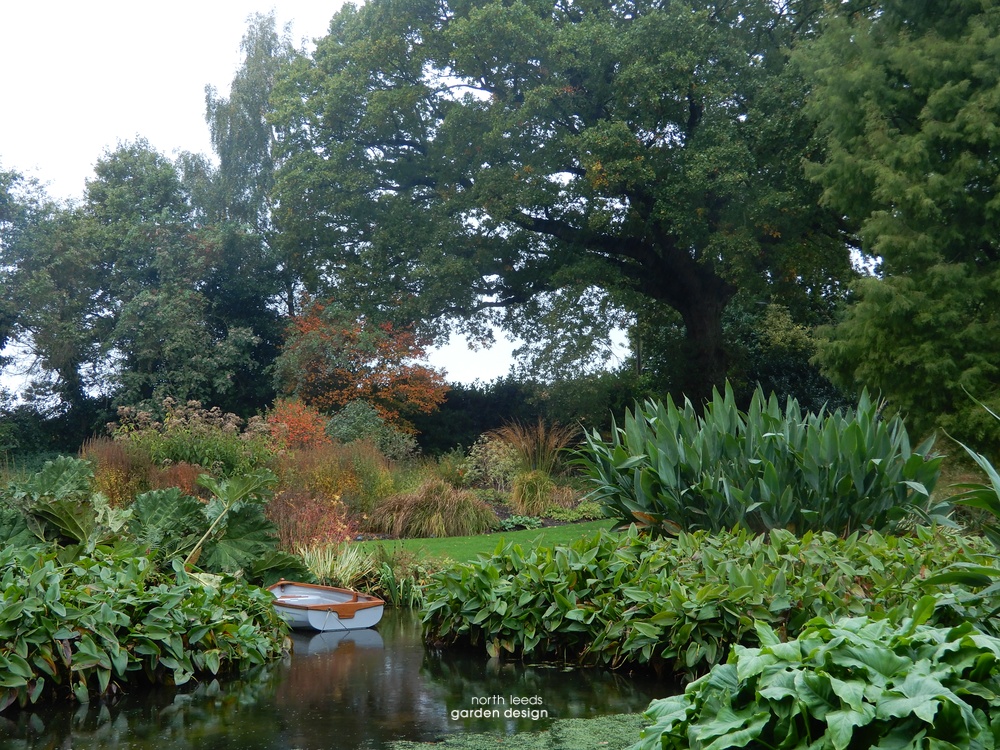
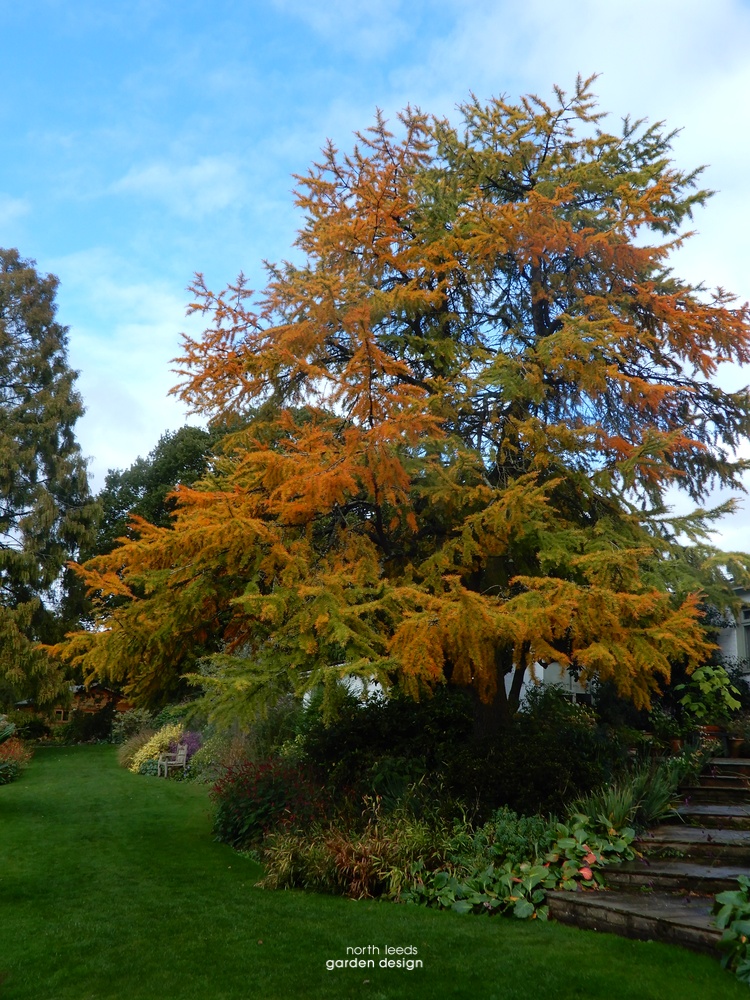
The Water Garden is grouped around four large ponds and is a particularly tranquil part of the garden. It was formed by damming the spring fed ditch and grows a wide variety of marginal and water loving plants. The area is very lush and green with large ferns, huge clumps of Phormium tenax both plain and variegated as well as an enormous Gunnera mannicata, the Giant Rhubarb with leaves more than 120cm across and each stem 2-3 m high, which is likely to be Gunnera cryptica (and is now banned as an Invasive Alien Species). Gardeners who already have Gunnera growing are required to ensure that it does not spread beyond their garden. The whole area in autumn is overlooked by an ancient oak tree and a golden Larch Pseudolarix amabilis which is truly spectacular amongst all the greens.
The Reservoir Garden
The neighbouring farm has a large reservoir alongside Beth’s Garden, so her development of the area is known as the Reservoir Garden, which was opened in her 94th year in June 2017. This is the most recent place in the garden that has been completely renovated, although like most gardens they evolve in small ways, all the time. The only plants that survived the rejuvenation are some huge Phormium Tenax and a beautiful Cercis siliquastrum. The area is now once again in the process of change as many of the previous plants have not enjoyed recent dry summers. The experiment which is underway is to test some known drought resistant herbaceous plants and see how they develop under climate change conditions.
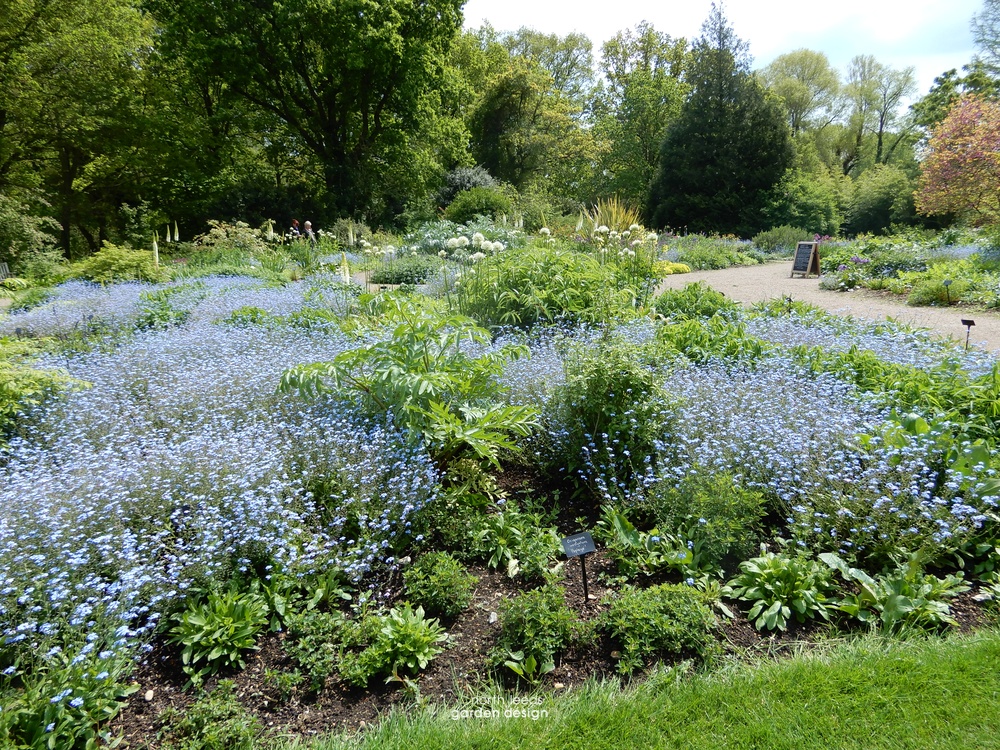
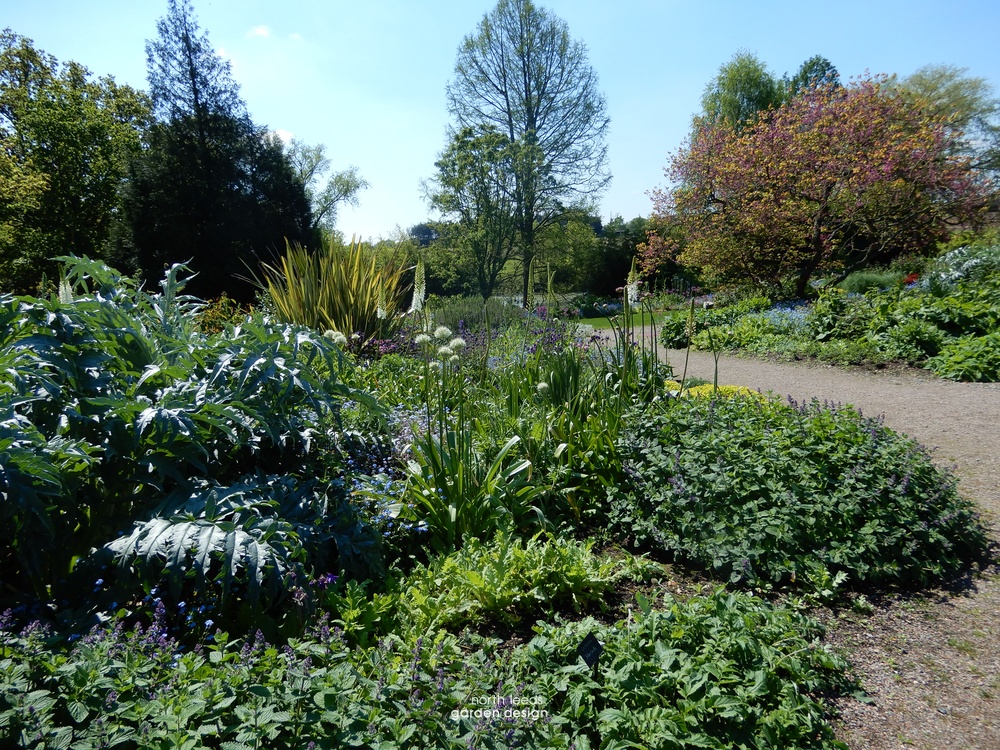
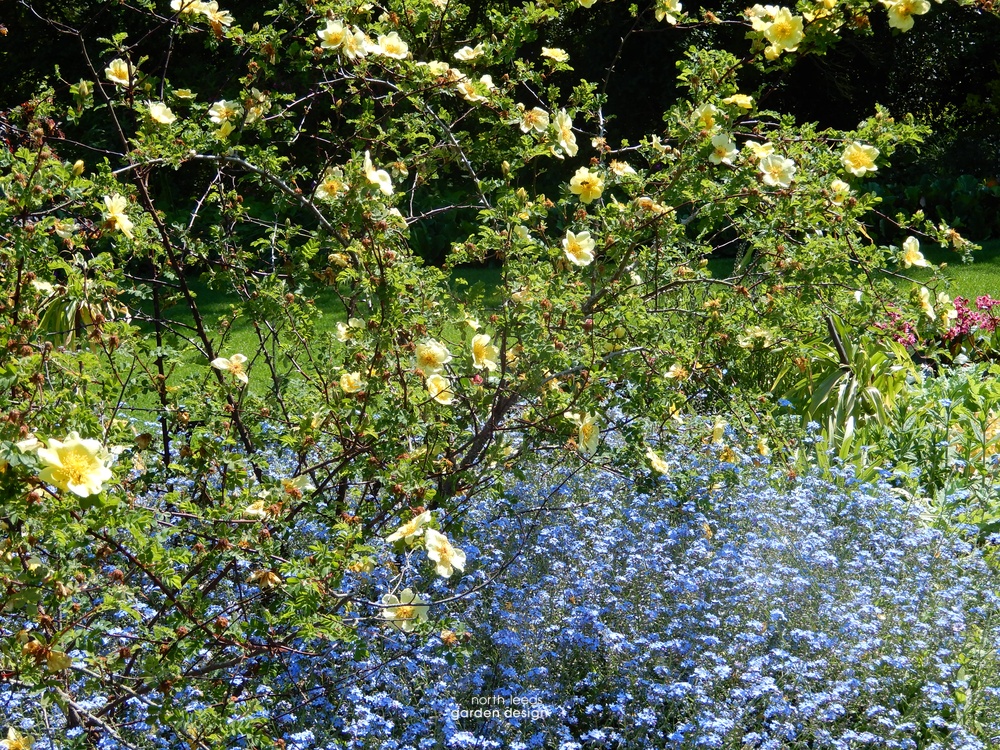
However, the present planting is interesting with a mix of old roses, unusual herbaceous specimens and grasses. One can get close to the plants from the winding paths through the borders and find the labels (most plants are labelled, although some must be searched for).
The Shade and Woodland Garden
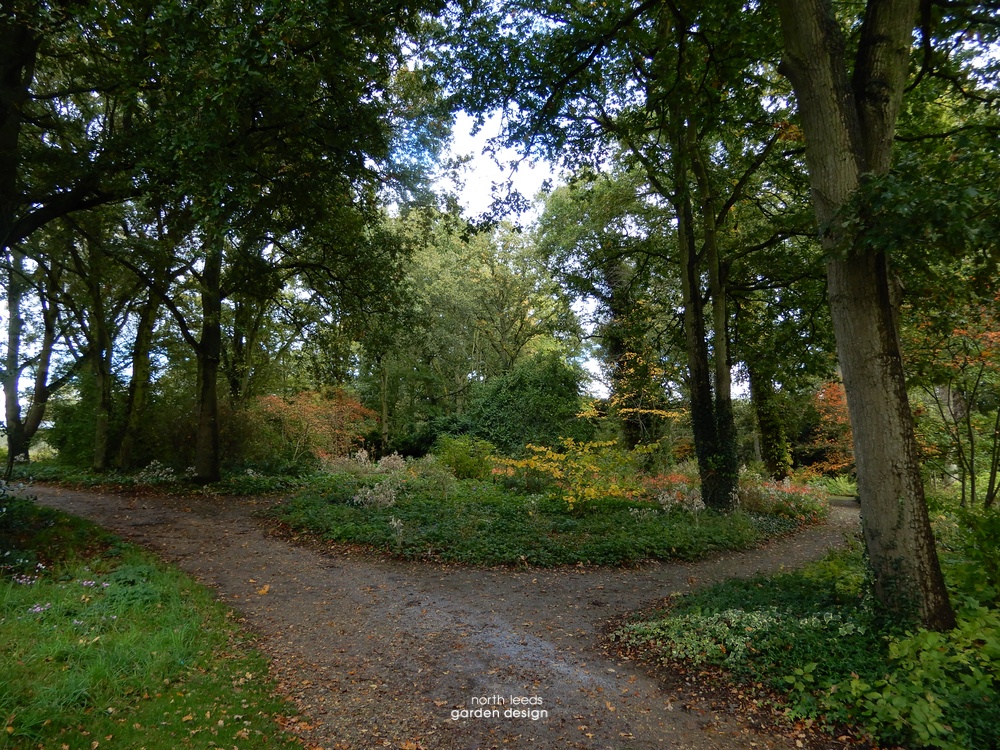
On the western edge of the garden is the Shade and Woodland Garden which is a quiet reflective area – almost wild, with benches to sit on and again meandering paths which run among the small shrubs and interesting ground cover. There are more ferns, pulmonaria (lungwort), Solomons Seal and many other shade loving plants such as Doronicum which pepper the area with light yellow daisy flowers in early summer.
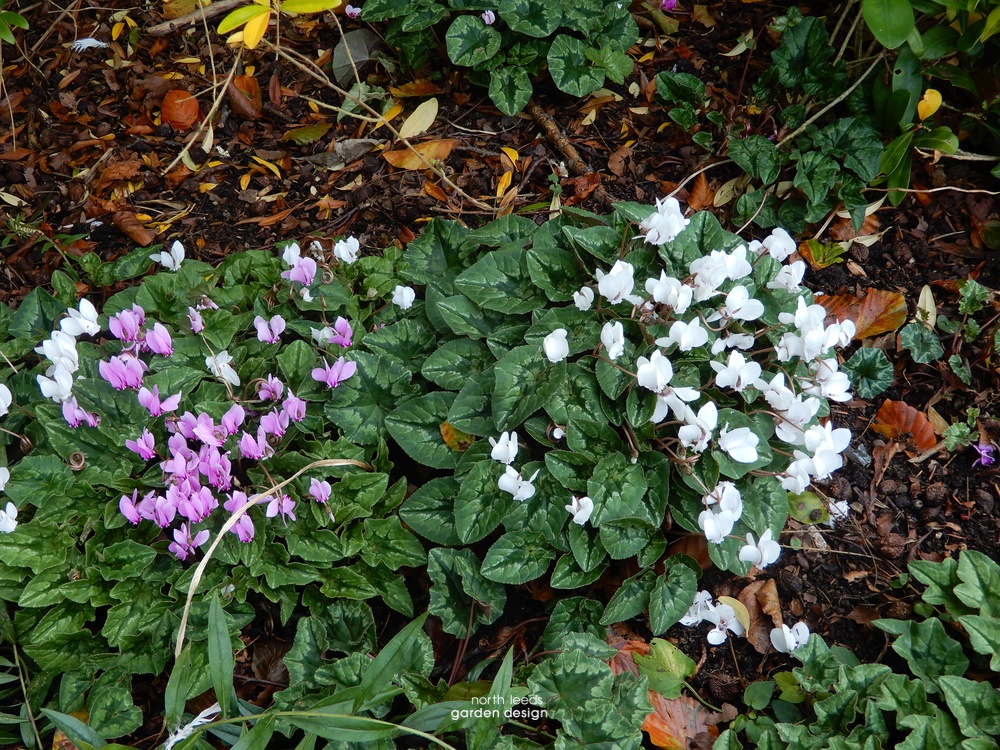
On the autumn visit, we were delighted with the carpets of Cyclamen hederifolium on the woodland edge, both pinks and white.
The Scree Garden
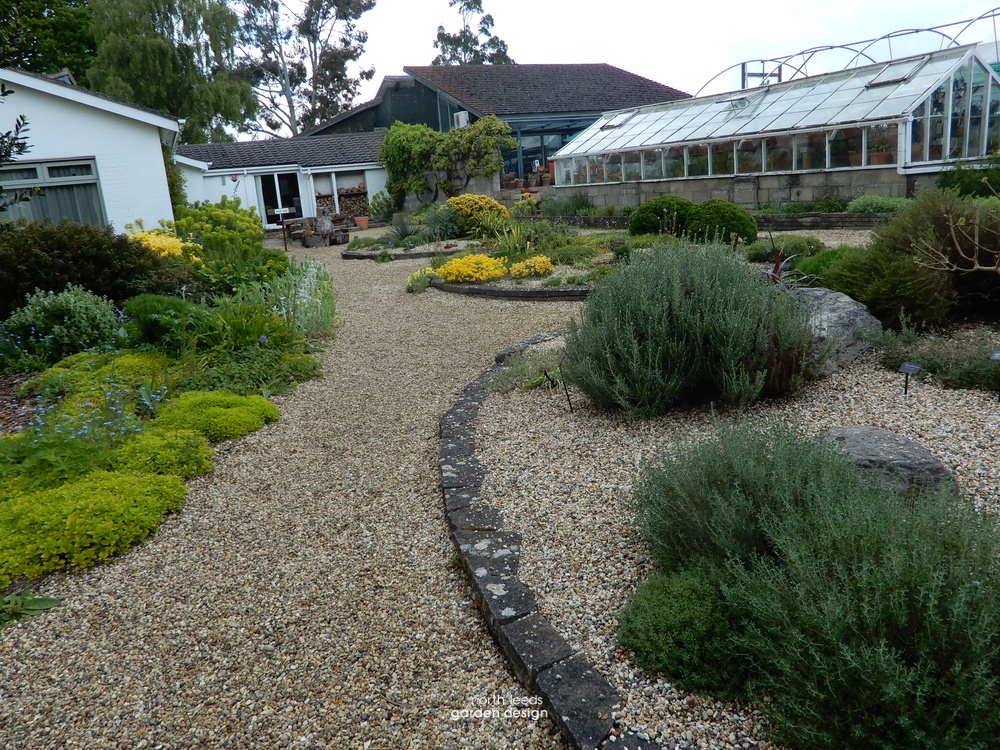
The final area of the garden to visit is a few small beds of alpine plants directly beside the house and nursery. It is full of interesting and unusual small plants, to demonstrate to visitors that gardens need not be large and the plants within them, equally can be small and still interesting and most of all they can be drought tolerant.
And finally, an area of the garden full of excitement and interest is the extensive plant sales area. Excellent labels and plant growing information is available for all the herbaceous plants in alphabetical order and a big shade tunnel with ferns and other special specimens. I could have spent an hour on each visit in the nursery, but lunch called and the café on site delivered!
RHS members have free entry January to March and in October but a summer visit is recommended.
Closer to home we recommend visiting our local garden once it opens again to the public with the snowdrops in February.
https://northleedsgardendesign.co.uk/a-visit-to-york-gate-garden/